Product Lifecycle Management Market Opportunity Analysis and Industry Forecast 2020-2027
 |
| Product Lifecycle Management Market |
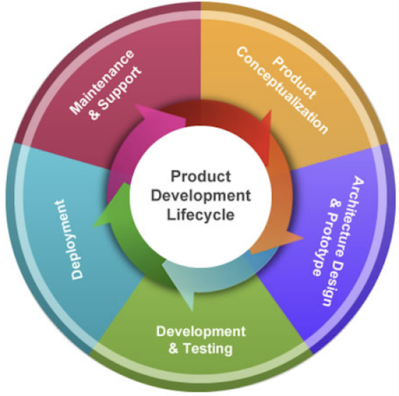
Product Lifecycle
Management (PLM) is a method of managing a product over its entire life
cycle, including maintenance, development, manufacturing, and recycling. PLM is
critical in businesses that support concept, design and engineering, product
portfolio management, and cost optimization. It enables effective collaborative
working at all stages, improving the overall operation of the business.
Manufacturing and pharmaceutical industries are currently facing challenges
such as increased competition and demand for product customization in order to
cater to specific individual needs and comply with stringent industry
regulations.
A Product Lifecycle Management solution can significantly increase a system's productivity by
providing various sets of tools and methodologies to reduce redundancies. It
offers knowledge and support for data sharing within an organisation while
lowering risks and product development time. It can significantly shorten the
design cycle and tooling preparation time. This, in turn, facilitates the
introduction of new products to the market and results in faster market
penetration. Product lifecycle management automatically adjusts any design
feature whenever a change is made. As a result, the global Product Lifecycle Management (PLM) Market is expected to grow
during the forecast period.
According to Coherent Market Insights, The global Product
Lifecycle Management Market was valued at US$ 61.31 Bn in 2019 and is estimated to reach US$
111.99 Bn by 2027 exhibiting a CAGR of 8.1% between 2020 and 2027.
Production innovation and
development are two key strategies for the company's revenue growth. The need
for newer products in short intervals of time, as well as the need for
customization based on customer requirements, are key characteristics of
today's industrial operations. Similarly, businesses must collaborate both
internally and with partners and suppliers all over the world. Furthermore, as
environmental and regulatory requirements grow in importance, businesses must
manage increasing complexities in their products and manufacturing processes.
In recent years, PLM has seen
massive growth from various end-use industries such as aerospace and
automotive. However, many nontraditional end-use sectors, such as
pharmaceutical, retail, and consumer packaged goods (CPG), are experiencing
rapid demand, which is expected to increase in the near future. This expansion
is prevalent in developed countries such as Germany, Japan, and the United
States. These economies have seen widespread adoption of PLM in industries such
as automotive and aerospace, and PLM demand has reached a significant maturity,
if not complete saturation. As a result, these factors are expected to drive
the growth of the global product lifecycle management (PLM) market in the near
future.
Small and medium-sized
enterprises (SMEs) make significant contributions to global economies. PLM
exposure has previously been limited to industries with variable, complex
product lines and large supplier networks, such as the automotive, electronics,
and aerospace industries. Mid-sized businesses recognise the value of PLM, but
are hesitant to implement it due to the limited nature of their IT resources,
resistance to any changes to standard operating procedures (SOPs), the unknown
nature of total costs, and the potential disruption to users. SMEs face
numerous challenges, including high implementation costs, changes in business processes,
and a lack of internal resources. As a result, these factors are expected to
limit the global product lifecycle management (PLM) market's growth during the
forecast period.
For Press
Release of Product Lifecycle
Management Market- https://www.coherentmarketinsights.com/press-release/product-lifecycle-management-market-3621


Comments
Post a Comment